Whiskey Decoded: Bourbon, Scotch, Rye, and Irish - What's the Difference?
Understand the key differences between bourbon, Scotch, rye, and Irish whiskey. Learn about production methods, flavor profiles, and which classic cocktails showcase each style.
Whiskey Decoded: Bourbon, Scotch, Rye, and Irish - What's the Difference?
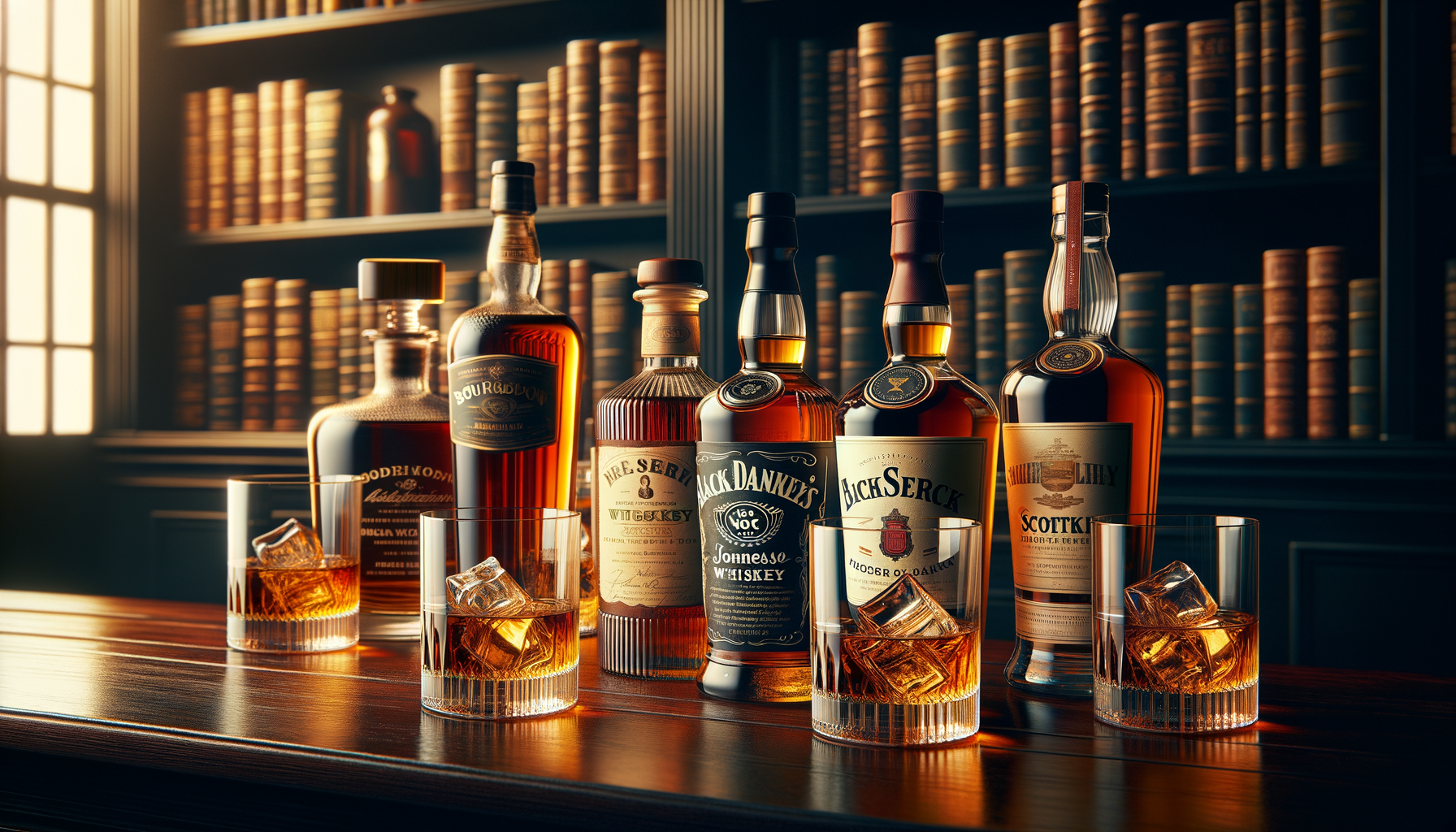
Walk into any well-stocked bar and you'll face a daunting wall of whiskey bottles. Bourbon, Scotch, rye, Irish—each proudly displaying their heritage and style. For newcomers and even experienced drinkers, understanding what makes each type unique can feel overwhelming. But once you grasp the fundamental differences, you'll navigate the whiskey world with confidence and discover which styles match your palate.
This guide breaks down the four major whiskey categories, explaining what makes each distinct, how to taste them, and which classic cocktails showcase their unique characteristics.
The Foundation: What Makes It Whiskey?
Before diving into specific types, understand what all whiskies share: they're distilled from fermented grain mash and aged in wooden barrels. The grain recipe (mashbill), distillation method, barrel type, aging duration, and geographic origin create the distinctive differences between styles.
The spelling varies too—"whiskey" (with an 'e') typically refers to Irish and American styles, while "whisky" (without the 'e') denotes Scottish and Canadian varieties. This seemingly minor difference reflects deep cultural traditions.
Bourbon: America's Native Spirit
What Makes It Bourbon?
Bourbon must meet strict legal requirements to earn its name:
- Made in the United States (not just Kentucky, though that's the heartland)
- Contain at least 51% corn in the mashbill
- Aged in new, charred American oak barrels
- Distilled to no more than 160 proof
- Entered into barrel at no more than 125 proof
- Bottled at 80 proof or higher
These regulations create bourbon's signature sweet, smooth character. The high corn content provides natural sweetness, while new charred oak barrels impart vanilla, caramel, and oak flavors that define the style.
Flavor Profile
Expect rich sweetness with notes of caramel, vanilla, butterscotch, and oak. Better bourbons show complexity with hints of dried fruit, baking spices (cinnamon, nutmeg), leather, and tobacco. The charred barrel creates a slight smoky sweetness distinct from Scotch's peat smoke.
Bourbon's warmth and approachability make it perfect for newcomers to whiskey while offering enough complexity to satisfy connoisseurs.
Classic Bourbon Brands
Entry Level: Jim Beam, Evan Williams, Buffalo Trace Mid-Range: Maker's Mark, Woodford Reserve, Four Roses Small Batch Premium: Blanton's, Pappy Van Winkle (if you can find it), Eagle Rare
Best Uses
Bourbon shines in cocktails—its sweet, bold character holds up against mixers while providing depth. The Manhattan and Old Fashioned were practically invented for bourbon, though quality examples deserve savoring neat or with a splash of water.
Scotch Whisky: Scotland's Liquid Gold
What Makes It Scotch?
Scotch whisky must be:
- Made in Scotland
- Distilled from malted barley (for single malt) or blended grains
- Aged in oak barrels for at least three years
- Bottled at minimum 40% ABV
Within these requirements exists tremendous variety. Single malt Scotch comes from one distillery using only malted barley. Blended Scotch combines malt and grain whiskies from multiple distilleries, creating consistent, accessible expressions.
Regional Differences
Scotland's whisky regions produce distinct styles:
Speyside: Elegant, fruity, and often sherried. Think Glenfiddich, Macallan, Balvenie.
Highland: Diverse styles from light and floral to rich and robust. Examples: Glenmorangie, Dalmore.
Islay: Heavily peated, smoky, medicinal. Iconic for peat-heads. Examples: Laphroaig, Ardbeg, Lagavulin.
Lowland: Light, gentle, floral. Great for bourbon drinkers transitioning to Scotch. Examples: Auchentoshan, Glenkinchie.
Island: Maritime character, moderate peat. Examples: Talisker, Highland Park.
Flavor Profile
Scotch's range is incredible—from light and floral to heavily peated and smoky. Speyside malts offer apple, pear, honey, and sherry notes. Islay malts bring iodine, seaweed, smoke, and medicinal flavors. Highland Scotches bridge these extremes.
The defining characteristic many associate with Scotch is peat smoke, though not all Scotches are peated. Peat—decomposed vegetation used to dry malted barley—creates distinctive smoky, earthy, sometimes medicinal flavors that divide whisky drinkers into peat-lovers and peat-avoiders.
Classic Scotch Brands
Entry Level Blends: Johnnie Walker Black, Chivas Regal, Dewar's Accessible Single Malts: Glenlivet 12, Glenfiddich 12, Monkey Shoulder Intermediate: Balvenie 12 DoubleWood, Talisker 10, Highland Park 12 Premium: Macallan 18, Lagavulin 16, Glenfarclas 25
Best Uses
Quality Scotch deserves respectful treatment—neat, with a few drops of water to open aromatics, or over a single large ice cube. While Scotch can work in cocktails (Penicillin cocktail is excellent), most enthusiasts prefer it in simpler preparations that don't mask its complexity.
Rye Whiskey: Spicy and Bold
What Makes It Rye?
American rye whiskey must:
- Contain at least 51% rye grain in the mashbill
- Follow similar aging and proof requirements as bourbon
- Be distilled and aged in the United States
Canadian "rye" whisky doesn't require any minimum rye content—it's a historical term that stuck even as recipes evolved.
Flavor Profile
Rye's defining characteristic is spiciness—think black pepper, cinnamon, clove, and baking spices. Less sweet than bourbon, rye offers a drier, more assertive flavor with notes of dried fruit, mint, and sometimes a slight grassiness.
This bold character makes rye exceptional in cocktails where you want the whiskey to assert itself against strong mixers. Pre-Prohibition cocktails were often made with rye, and the style's revival has helped restore these classic recipes to their intended glory.
Classic Rye Brands
Entry Level: Rittenhouse Rye, Old Overholt, Jim Beam Rye Mid-Range: Bulleit Rye, Sazerac Rye, Redemption High-Rye Premium: Whistlepig, Thomas H. Handy Sazerac, High West Double Rye
Best Uses
Rye excels in classic cocktails—Manhattans, Sazeracs, and Whiskey Sours benefit from its spicy complexity. The assertive flavor cuts through sweet vermouth and bitters, creating balanced, sophisticated drinks. Rye also works beautifully neat for those who prefer drier, more complex spirits.
Irish Whiskey: Smooth and Approachable
What Makes It Irish?
Irish whiskey must be:
- Made in Ireland (North or Republic)
- Distilled from cereal grains
- Aged in wooden casks for at least three years
- Distilled to less than 94.8% ABV
Traditionally triple-distilled (though not required), Irish whiskey tends toward smoothness and lighter body compared to bourbon or Scotch.
Flavor Profile
Irish whiskey emphasizes smoothness and drinkability. Expect honey, vanilla, light fruit notes (apple, pear), and gentle spice without bourbon's heavy sweetness or Scotch's assertive peat.
The triple distillation often employed creates a lighter, cleaner spirit that some find more approachable than other whiskey styles. This makes Irish whiskey excellent for newcomers while offering enough character for experienced drinkers.
Types of Irish Whiskey
Single Pot Still: Made from malted and unmalted barley in pot stills. Creamy, spicy. Example: Redbreast, Green Spot.
Single Malt: 100% malted barley from one distillery. Example: Bushmills.
Grain Whiskey: Made from corn or wheat, lighter and smoother. Usually blended.
Blended: Combining pot still, malt, and grain whiskeys. Most common style. Example: Jameson, Tullamore Dew.
Classic Irish Brands
Entry Level: Jameson, Tullamore Dew, Bushmills Original Mid-Range: Powers Gold Label, Teeling Small Batch, Redbreast 12 Premium: Redbreast 15, Green Spot, Midleton Very Rare
Best Uses
Irish whiskey's smoothness makes it perfect for sipping neat or in simple serves with water or ginger ale. It works beautifully in Irish Coffee and whiskey sours, though its gentle character can get lost in overly complex cocktails.
Comparing the Four Styles
Sweetness Scale (Sweet to Dry)
- Bourbon (sweetest - corn-forward)
- Irish Whiskey (smooth, honey notes)
- Scotch (ranges widely, generally drier)
- Rye (driest - spicy)
Body Weight (Light to Heavy)
- Irish Whiskey (lightest, triple-distilled)
- Scotch (varies by style)
- Rye (medium-full)
- Bourbon (fullest, viscous)
Complexity (Simple to Complex)
- Entry Blends (smooth, consistent)
- Irish Whiskey (gentle complexity)
- Bourbon (sweet complexity)
- Rye (spicy complexity)
- Premium Scotch (most complex range)
Classic Whiskey Cocktails
The Manhattan
Rye or bourbon (traditionally rye), sweet vermouth, and Angostura bitters stirred and served up with a cherry. This cocktail showcases whiskey's ability to harmonize with other bold flavors while maintaining its character.
Rye Manhattan: Spicy, dry, sophisticated Bourbon Manhattan: Sweeter, richer, more approachable
The Old Fashioned
Bourbon or rye muddled with sugar and bitters, served over ice with an orange peel. This drink is pure whiskey appreciation with minimal interference—the sugar and bitters enhance rather than mask the spirit's character.
The Whiskey Sour
Whiskey, lemon juice, simple syrup, optional egg white for froth. Works with bourbon, rye, or Irish whiskey. Each base creates a different experience—bourbon provides richness, rye adds spice, Irish offers smoothness.
The Irish Coffee
Hot coffee, Irish whiskey, brown sugar, topped with cream. Perfect for cold weather,serving as dessert and nightcap in one delicious package.
Building Your Whiskey Collection
Don't try to buy everything at once. Start strategically:
Foundation: One quality bourbon (Buffalo Trace, Maker's Mark) for cocktails and sipping.
Exploration: Add either a rye (Rittenhouse) if you love cocktails, or an accessible Scotch (Glenlivet 12) if you prefer sipping.
Irish Option: Jameson or Powers for easy drinking and Irish Coffee.
Growth: From there, explore based on what you enjoy. Love the bourbon? Try different mashbills or age statements. Fascinated by Scotch? Explore different regions.
Tasting Whiskey Properly
-
Use Proper Glassware: Tulip-shaped Glencairn glasses or rocks glasses work well. Avoid shot glasses—they don't allow appreciation of aromatics.
-
Add Water: A few drops of water opens up flavors and aromatics, especially in higher-proof whiskeys. Don't be afraid to experiment.
-
Nose First: Aromatics provide half the experience. Take time to smell the whiskey before tasting.
-
Small Sips: Let the whiskey coat your palate. Breathe through your nose while tasting to capture full flavor.
-
Note the Finish: How long do flavors linger? What changes as it fades?
Pairing Whiskey with Food
Different whiskey styles complement different foods:
Bourbon: Rich meats (BBQ, brisket), chocolate desserts, pecan pie Scotch: Smoked salmon, aged cheese, dark chocolate Rye: Spicy foods, charcuterie, rye bread with strong cheese Irish: Lighter fare, oysters, apple desserts
Storage and Serving
Whiskey doesn't age in the bottle—a 12-year Scotch remains 12-year forever once bottled. Store whiskey upright (lying down degrades the cork) in a cool, dark place. Once opened, whiskey maintains quality for years if properly stored.
Serve bourbon and rye at room temperature or with one large ice cube. Scotch typically served neat or with a splash of water. Irish whiskey works both neat and on the rocks.
The Journey Continues
Understanding bourbon, Scotch, rye, and Irish whiskey provides the foundation for whiskey appreciation, but each category offers lifetime exploration. Regional variations, age statements, cask finishes, and limited releases create endless discovery opportunities.
Start with quality examples from each category. Notice what appeals to you—sweetness versus spice, light versus heavy, simple versus complex. Explore our cocktail collection for whiskey-based recipes, or create custom cocktails featuring your favorite style.
The best whiskey is the one you enjoy drinking. Whether that's a $30 bourbon neat, a peated Islay Scotch over ice, or a rye Manhattan on Friday evening, understanding these differences helps you make informed choices and appreciate what makes each style special.
Here's to your whiskey journey—may it be as complex and rewarding as the spirits themselves!
Use Elixiary for this
Put what you learned into practice
Jump into Elixiary tools and make a drink now.