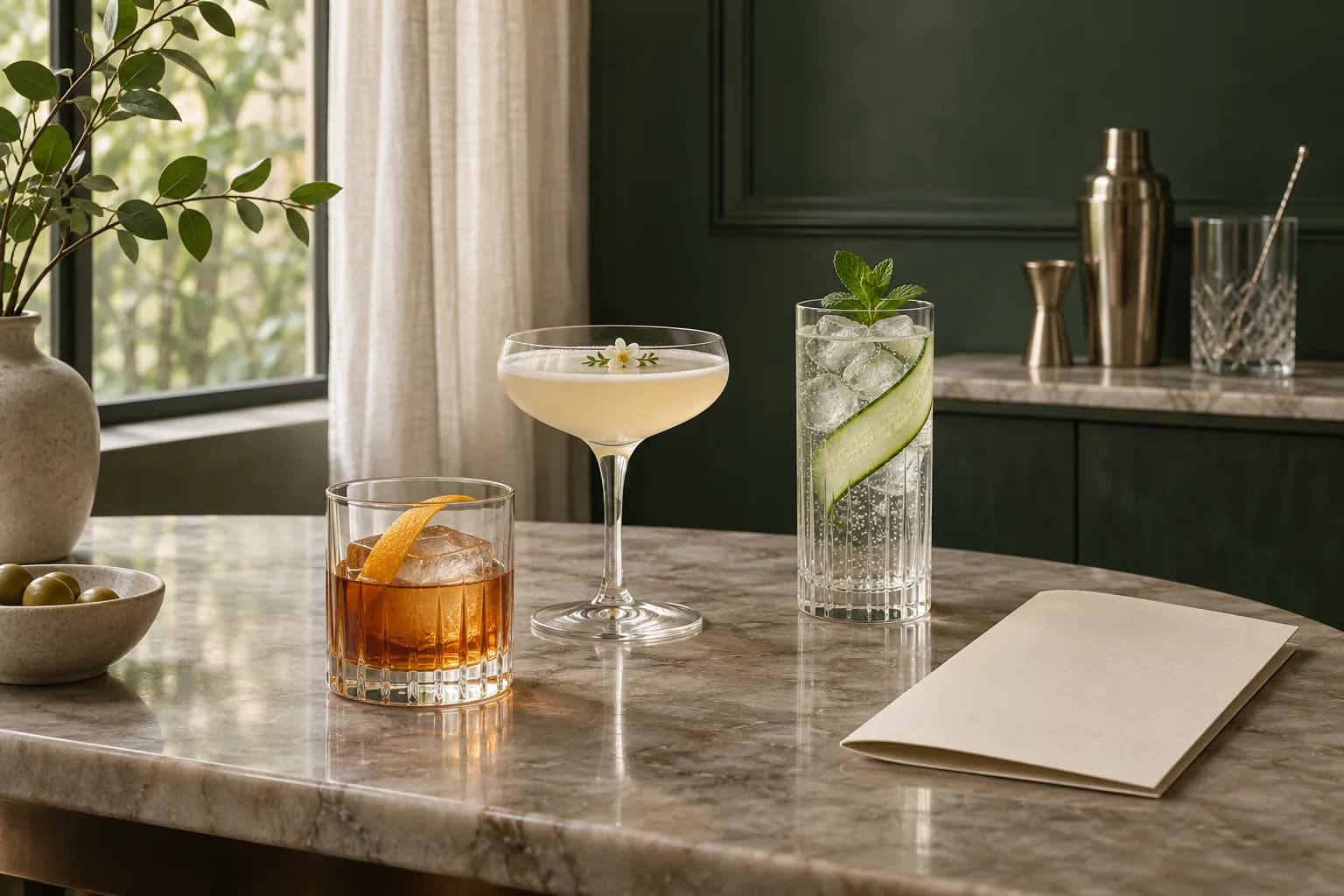
A menu needs to work at the station as well as on the page. A drink that requires five separate fresh preparations may be reasonable alone and impractical beside several others. Map the whole menu before choosing its final wording.
Give each drink a job
Use flavour and texture descriptions that a guest can act on: tart, bitter, creamy, sparkling or spirit-forward. Keep actual alcohol information distinct from words such as “light” or “refreshing”. Pale colour is not low strength.
Here is a planning example, not a tested sales menu:
| Slot | Candidate | Operational question |
|---|---|---|
| Stirred and bitter | Negroni | Are the three exact products stocked and measured? |
| Shaken and tart | Daiquiri | Can the station maintain citrus and sugar preparation? |
| Long and fizzy | Moscow Mule | Is chilled ginger beer available at service? |
| Alcohol-free | A complete approved recipe | Are all components verified for the guest's needs? |
The full recipe catalogue supplies individual formulas. Choose them before calculating shopping quantities, portions or costs.
Map the hidden work
For every candidate, list prepared ingredients, equipment, serving glass, ice, garnish, storage and finishing steps. Mark tasks that can be prepared ahead under their handling instructions. Keep sparkling additions and texture-sensitive finishes separate where the recipe requires.
Shared lime juice can simplify purchasing, but a common ingredient does not make different drinks batchable together. A nut syrup may also require separate allergen handling, while a blender drink occupies equipment that another recipe needs.
Give alcohol-free choices equal attention
Write a complete recipe and useful flavour description. Do not offer “any cocktail without the spirit” as if removal preserves balance or ensures zero alcohol. Bitters, liqueurs and fermented ingredients need checking too.
Keep ingredient and allergen records behind the menu. If a supplier or garnish changes, review that information before the next service. Public menu wording must meet the venue's local requirements; a generic dietary icon is not a substitute for verified contents.
Check cost and capacity separately
A cost sheet explains ingredient economics. A supervised service rehearsal reveals whether the station can execute the menu. Neither a high margin nor an attractive photograph proves a drink can be served consistently during the actual workload.
For a rehearsal, use a defined mixed order and record unavailable products, equipment conflicts, delayed drinks and unclear handoffs. Do not invent service-time claims. Adjust the prep plan or menu after reviewing what actually happened.
Write the final description
Name the main ingredients and the flavour the guest needs to understand. Avoid “premium”, “elevated” and “a journey” unless you can replace them with something concrete. Price and availability should be clear.
Keep a dated version of the menu, approved recipes and component records together. The batching guide helps distinguish preparation from finishing; the storage guide prevents a prep advantage from becoming an unsupported shelf-life claim.
FAQs
Does ingredient overlap guarantee faster service?
No. Equipment, storage, finishing and handoffs also matter.
Should every alcoholic drink have a spirit-free copy?
Offer complete alcohol-free recipes designed for that purpose, with every component checked.