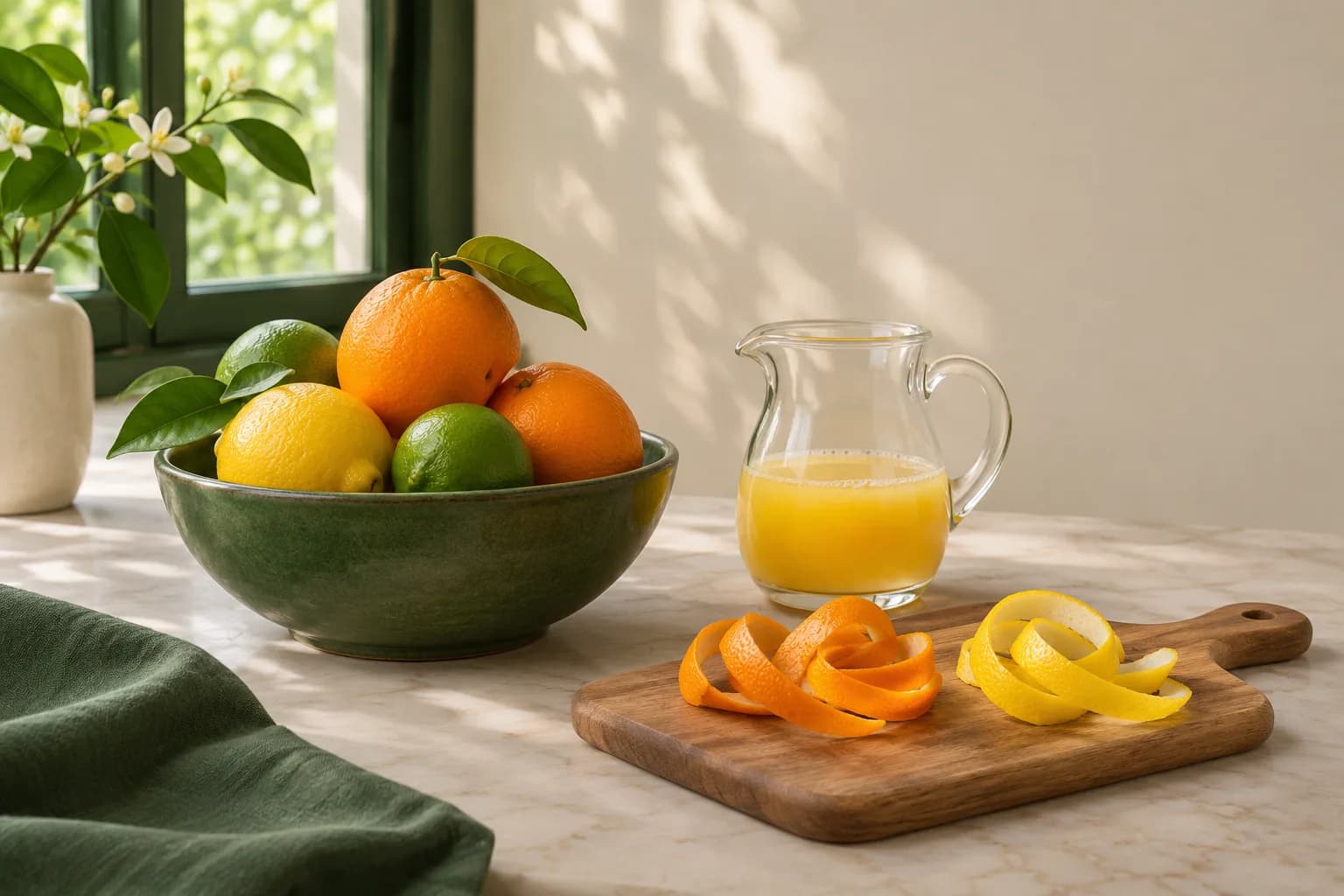
A waste claim needs a record. Reusing a peel can be useful, but it does not prove a bar is sustainable or that the reuse is suitable for service. Start by measuring where material is lost and why.
Separate the causes
Record preparation trim, transfer loss, spoilage, rejected drinks and packaging separately. A fruit peel and a spoiled dairy preparation need different decisions. The goal is not to make every discarded item edible; it is to avoid preventable loss while preserving safe handling.
Use food-safe containers and keep waste away from service ingredients. Nothing returned by a guest goes back into a preparation.
A hypothetical yield record
| Field | Example |
|---|---|
| Purchased fruit | 2,000 g |
| Usable prepared juice recovered | 700 g |
| Juice recovery by mass | 35% |
| Other material and losses | 1,300 g |
This mass calculation is 700 / 2,000 × 100. It is not 700 ml of juice, and the remainder is not automatically 1,300 g of avoidable waste. Peel, seeds, retained juice and handling losses need separate observation.
For recipe planning, measure the usable juice volume as well. Purchase mass, recovery mass and service volume answer different questions.
Compare one preparation change
Suppose a second, otherwise comparable batch of 2,000 g fruit yields 760 g juice after a change in pressing method. Recovery is 38%, an increase of 3 percentage points. The relative increase is 60 / 700 × 100, about 8.6%.
Those are hypothetical numbers, not Elixiary test results. Fruit variety, ripeness, operator and equipment can affect a real comparison. Record them, repeat the process as needed and check quality and handling before adopting a change.
Do not turn the extra 60 g into a claimed carbon saving without a separate assessment. A yield improvement and an environmental footprint are different measurements.
Reduce spoilage through planning
Compare actual demand with preparation size. Smaller batches may reduce leftovers but require more labour and washing; review the whole workflow. Label every preparation with its identity, concentration or recipe version, date and approved storage instructions.
Use the batching guide to calculate servings, and the storage guide for handling distinctions. Do not extend a discard time because throwing away a preparation feels wasteful.
Evaluate reuse separately
A peel might be suitable for a documented syrup or cordial made under its own recipe. It is not suitable simply because it looks clean. Keep ingredient identity, washing, handling, storage and any allergen information intact. Do not put uncertain leftovers into a “zero-waste” jar.
Review the waste record with the team without punishing accurate reporting. A clear reason can reveal a purchasing or recipe problem; a blank sheet can simply mean nobody recorded it.
FAQs
Does higher yield prove lower environmental impact?
No. That needs a separate assessment with a defined scope.
Can every citrus peel be reused?
No. Suitability depends on its handling and the complete preparation method.