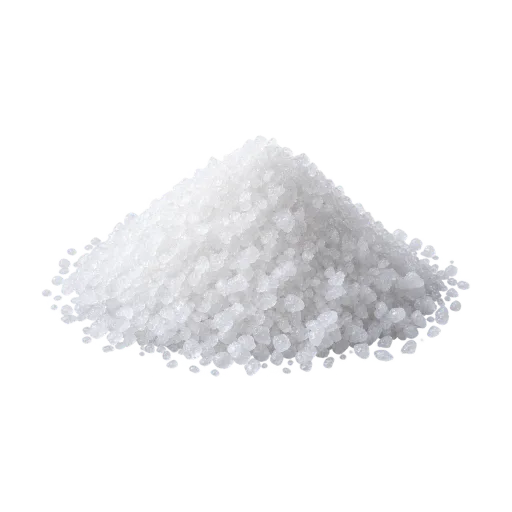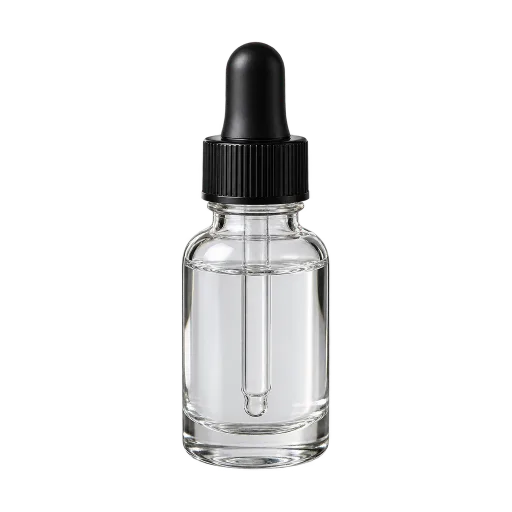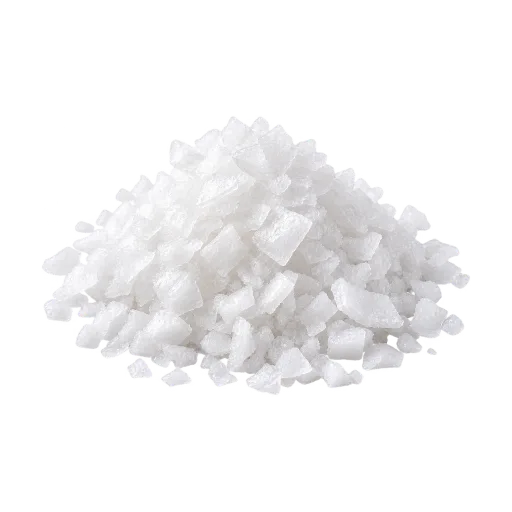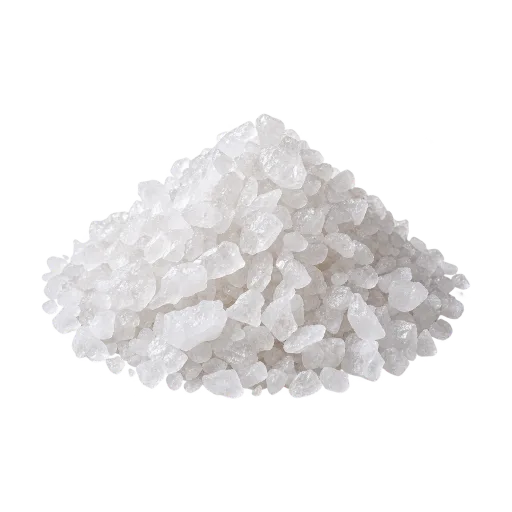
Four grams of salt dissolved in 96 g water makes 100 g of a 4% salt solution by mass. That is an easy specification to repeat. “A pinch” is a different kind of instruction, and a drop from one bottle is not guaranteed to match a drop from another.
Saline lets you add a small amount of dissolved food salt to a drink. Use it where a complete recipe calls for it, or keep it as a recorded variation. It does not belong in every cocktail by default.
Make one defined preparation
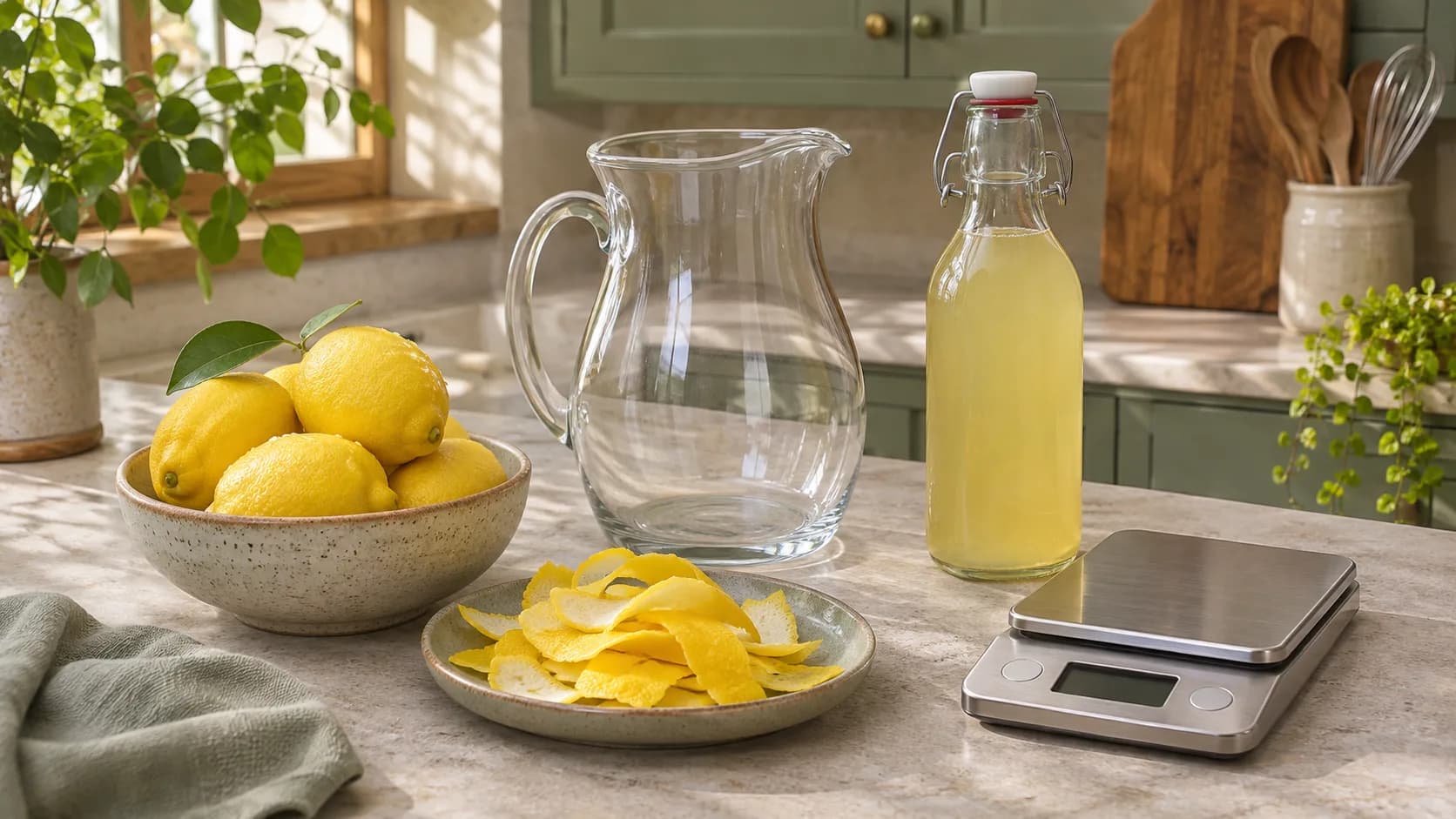
Milk Street's own cocktail comparison used a 4% solution made from 4 g kosher salt and 96 g water. This preparation follows those masses:
- Set a clean food-safe mixing vessel on a suitable scale and tare it.
- Weigh 4 g plain food salt and 96 g drinking water separately.
- Stir until the salt dissolves, then transfer to a clean food-safe dispensing bottle.
- Label it “4% salt by mass: 4 g salt + 96 g water,” with the preparation date.
The starting yield is 100 g before transfer losses, not automatically 100 ml. Use only food ingredients and keep the container clearly identified. Make a small working quantity, protect the opening from contact and follow appropriate handling; do not infer an indefinite keeping time from the concentration.
Milk Street reports its own tasting results. We have not repeated that comparison, so its preferred dose is a starting reference rather than an Elixiary finding or a guarantee that you will prefer the result.
Read percentages carefully
| Wording | What it actually describes |
|---|---|
| 4 g salt plus 96 g water | 4% salt by total mass |
| 20 g salt plus 80 g water | 20% salt by total mass |
| 20 g salt plus 100 g water | About 16.7% salt by total mass |
| One part salt to ten parts water by mass | About 9.1% salt by total mass |
These are different preparations. A dose copied from one should not be carried into another without accounting for concentration. Volume and mass specifications are also different; do not assume a teaspoon of coarse salt weighs the same as a teaspoon of fine salt.
A restrained worked variation
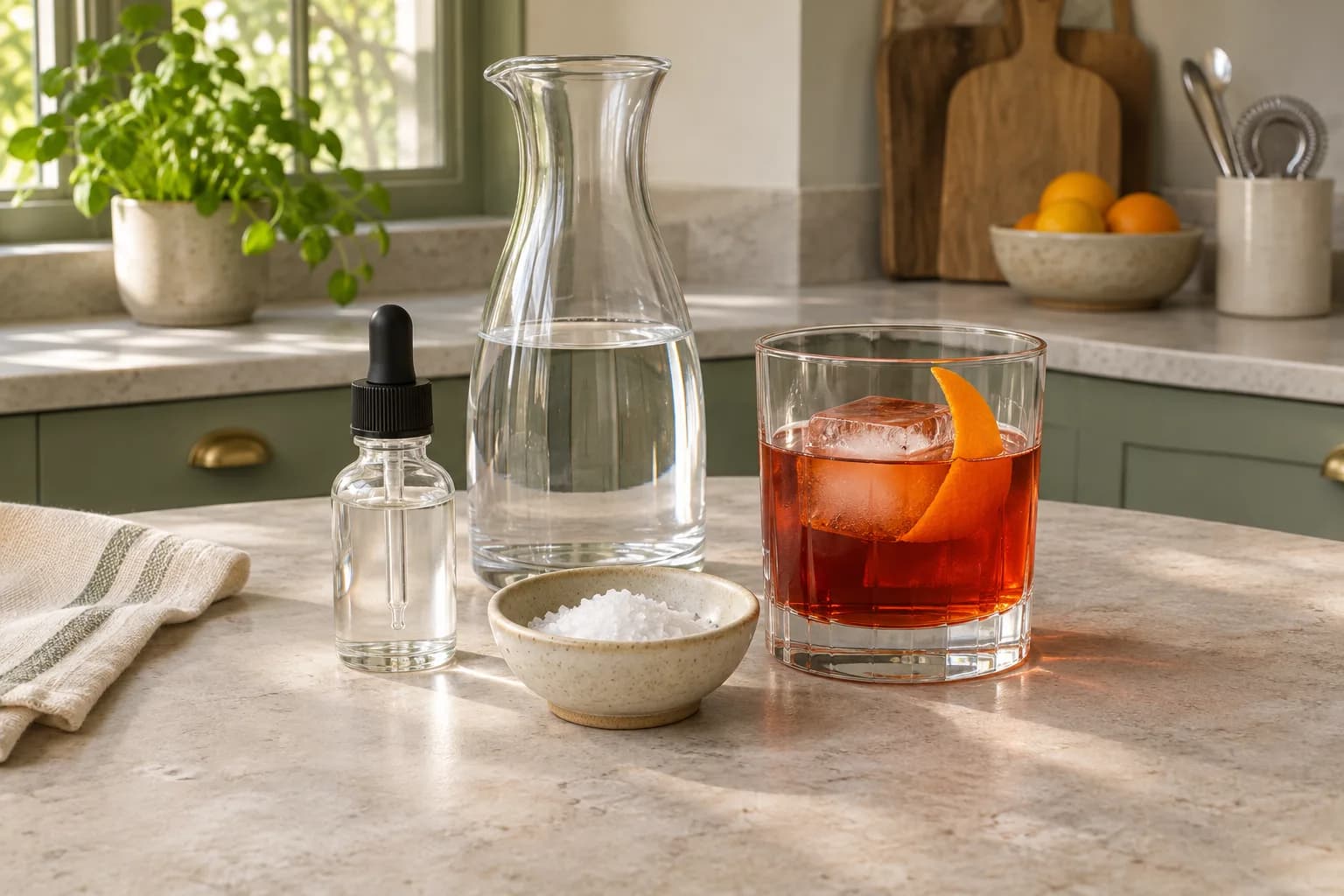
Start from the IBA Negroni: 30 ml gin, 30 ml Campari and 30 ml sweet red vermouth, built and stirred over ice in a rocks glass, with half an orange slice. Keep that original recipe identified.
Milk Street used half a teaspoon of its 4% solution in its non-Martini cocktail comparisons. If you choose to explore that suggestion in the measured Negroni above, treat the addition as a variation. Use the same measuring spoon and solution, add it before the gentle stir, and record it alongside the exact bottles. A US half-teaspoon is about 2.5 ml when rounded for bar use; it is not a universal drop count.
You need a jigger, spoon, serving glass and clean dispensing tools. Make no other ingredient change in that attempt. Describe what you notice before deciding whether to repeat it. You can also leave the recipe unsalted; the purpose is deliberate seasoning, not adding a required extra step.
Do not interpret the small addition as removing sugar, acid or alcohol. The balance guide explains why perception and ingredient amounts are separate questions.
When the result is too salty
Check the solution label, the dose and whether the recipe already contains brine, celery salt or another salted ingredient. A rim contributes another contact-dependent amount; it is not equivalent to a measured addition throughout the drink.
For the next serving, return to the unsalted recipe or reduce the recorded addition. Adding syrup to a salty drink changes sweetness while leaving the salt present. Diluting the whole glass changes every other flavour and serving volume as well.
Keep seasoned preparations out of shared bottles unless the full recipe and label are updated. Guests should not have to discover an unrecorded ingredient by tasting it. For intentionally savoury choices, use the savoury cocktail guide.
FAQs
Is 20% saline the only useful concentration?
No. Recipes use different strengths. Define the preparation and use its intended dose.
How many drops should I add?
Follow the complete recipe and dispensing instructions. Drop size varies, so a universal number would hide useful information.
Can saline fix an otherwise unbalanced drink?
It is seasoning, not a replacement for checking the original proportions, ingredients and method.